Don't just listen — experience it. Three campaigns built around the crowd cultures that make The Weeknd's world turn.
Crowd Culture Plan
Self-directed campaign study
I developed three audience-led campaign concepts around The Weeknd’s After Hours, connecting fan culture with physical activations.
Project decisions & details
Challenge
Sell The Weeknd's world by selling the crowd cultures inside it — not just the music.
Outcome
A multi-campaign advertising study showing conceptual range and audience-first art direction.
Role
Campaign strategy, concept development, and visual design
Channels
Social polling, a Toronto exhibition, and OOH activation
Timing
A one-month launch window beginning with audience voting
Production scope
Three fan-culture directions developed through mockups, event concepts, and media placements
Overview
At the basis of crowd culture, branding is an essential aspect of marketing a product or service. The concept of crowd culture is the community of people connecting authentic purposes, ideologies, and services to leverage these ideologies to communicate with the crowd (Holt, 2016). Finding these opportunities for cultural innovation is why the Canadian singer known as The Weeknd has found his audience — targeting novel niches not afraid to be expressed compared to the norm in the music environment.
After Hours, released March 2020, is a fourteen-track long playing record — a reminiscence of Abel Tesfaye's mysterious background from his 2011 underground debut to the highest moments of his career. Throughout his eleven-year career, the Toronto-born artist played novelty through dark, genre-defining themes: trap and soul tunes of a drugged-out album embedded into almost every stance of his playlist.
"Take off my disguise. I'm living someone else's life."
— The Weeknd, Alone Again (After Hours, 2020)
14
Tracks on After Hours
3
Crowd culture campaigns
61%
Millennial favourability
The 3 Ideologies
Three distinct ideologies run through After Hours, each informing a separate campaign direction. Together, they map the full emotional and cultural terrain of the album.
01
Individuality
The self-realization of his toxicity is at the center helm. The album takes on a return to form — from a voice full of scarring emotion to an award-winning force of nature.
02
Masculinity & Spirituality
A spiritual successor to the places he explored before. After Hours takes in the sounds of his early mixtapes while pushing into new territory of self-aware toxicity.
03
Maturity & Religion
References to losing his religion, the pain, the praying, and the overall death — combined with his vision of the villain and the self-hatred into a compelling narrative.
01
Going for Gold
Ideology — Masculinity & Spirituality
Fan-voted track reimagining
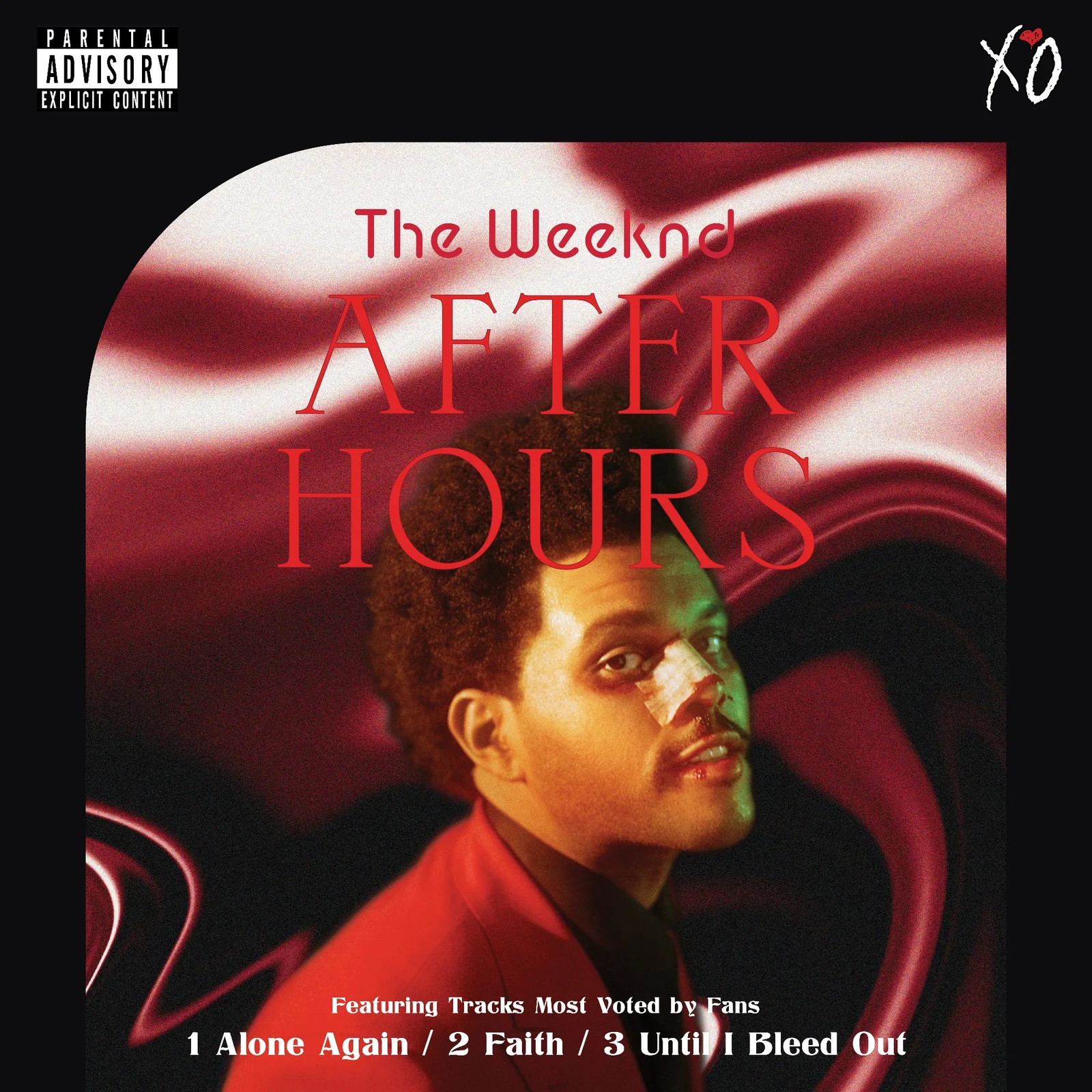
This campaign turns the listening habits and opinions surrounding After Hours into a shared fan ritual. The goal is to build a community around the critiques, responses, and personal moments listeners attach to individual tracks.
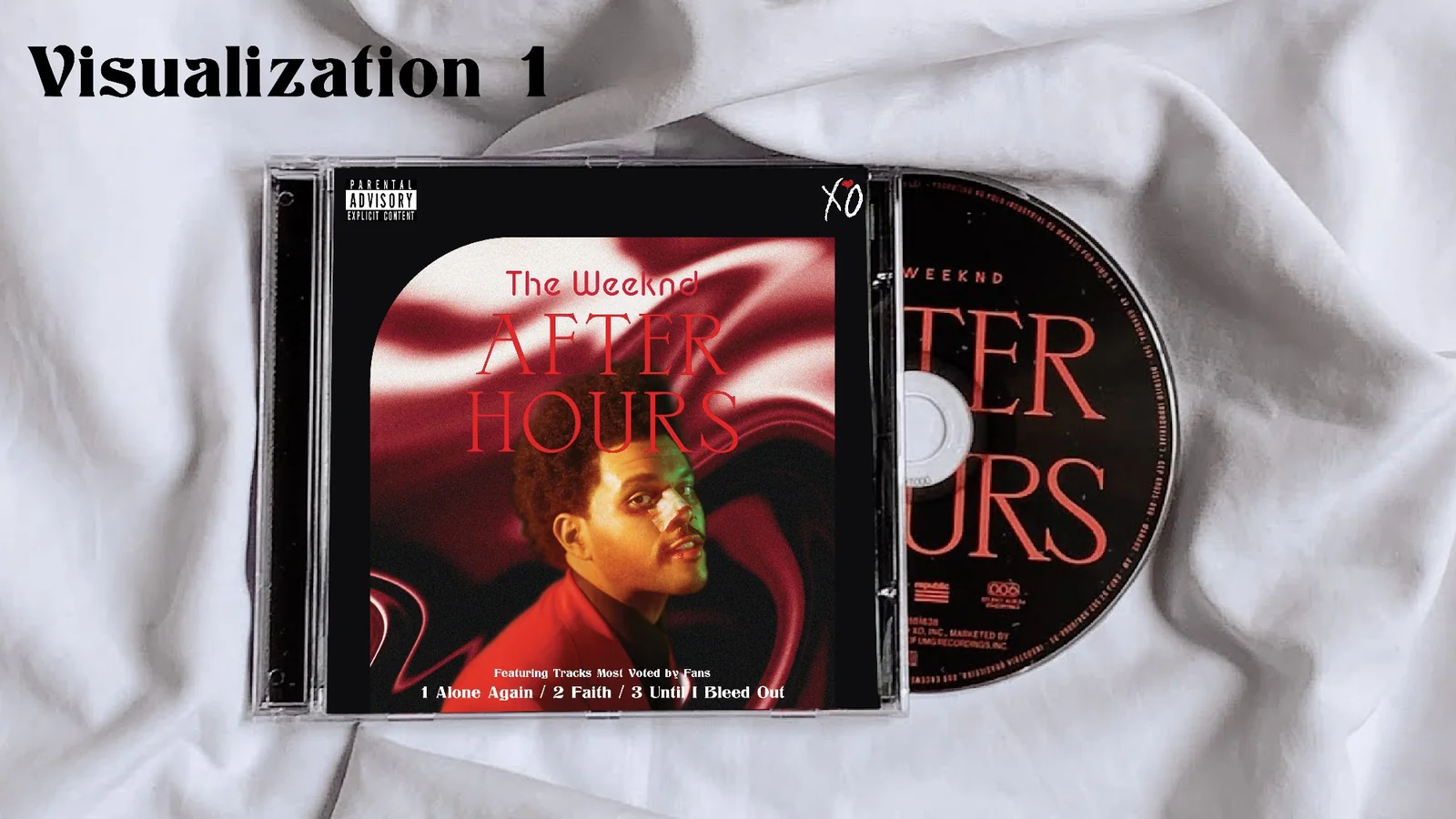
Polls on Twitter and Instagram invite fans to choose the songs they played and replayed most. At the end of the album's first month, the three most-voted tracks receive the "golden treatment" in a fan-selected repackaged edition.
Social Media · Month 1
PL. 01Campaign 1 — Going for Gold concept
PL. 02Campaign 1 — CD visualization
02
The Man Behind The Mask
Ideology — Individuality
After Hours Exhibition — Toronto
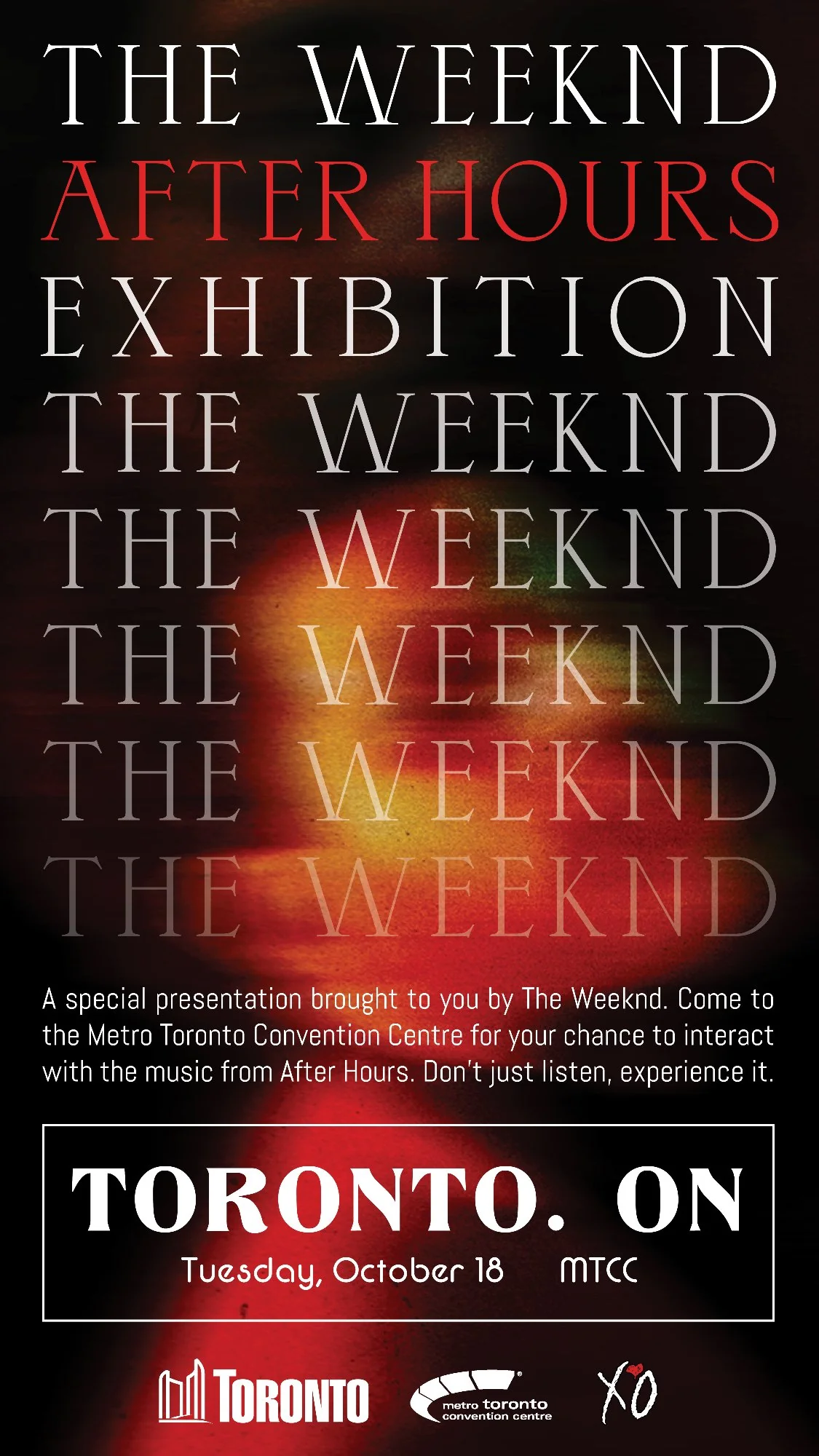
An exhibition-style brand activation brings the world of After Hours into physical space, giving the album's visual narrative a form audiences can enter rather than only hear or watch.
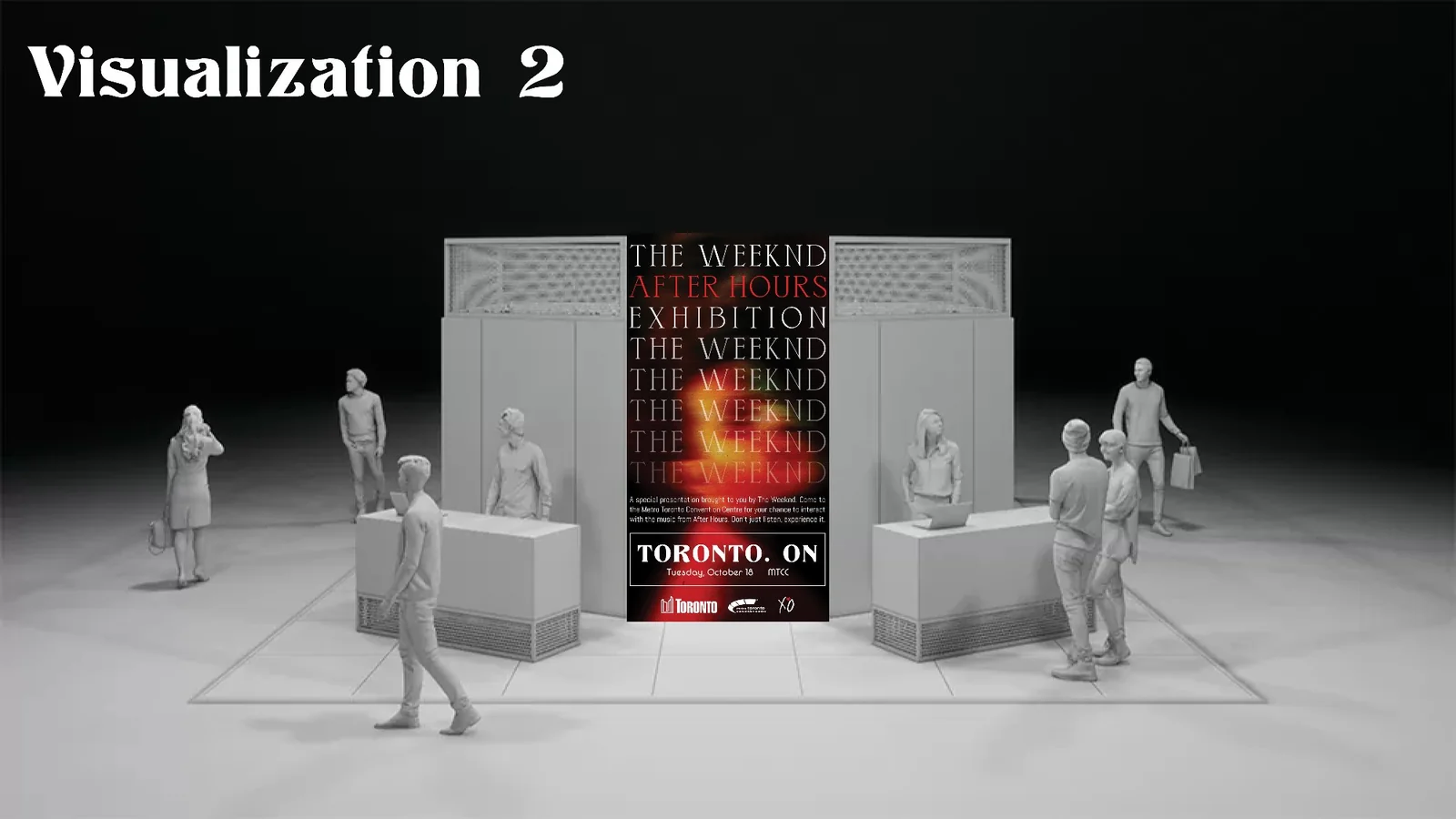
Opening during the album's first month at the Metro Toronto Convention Centre, the experience displays the era's red suit, gloves, and sunglasses as narrative artefacts. Visitors can also handle selected props and try on clothing, connecting the exhibition to merchandise without reducing it to a retail display.
Brand Activation · MTCC Toronto · Month 1
PL. 03Campaign 2 — Exhibition poster
PL. 04Campaign 2 — Exhibition visualization
03
Making a Decision
Ideology — Maturity & Religion
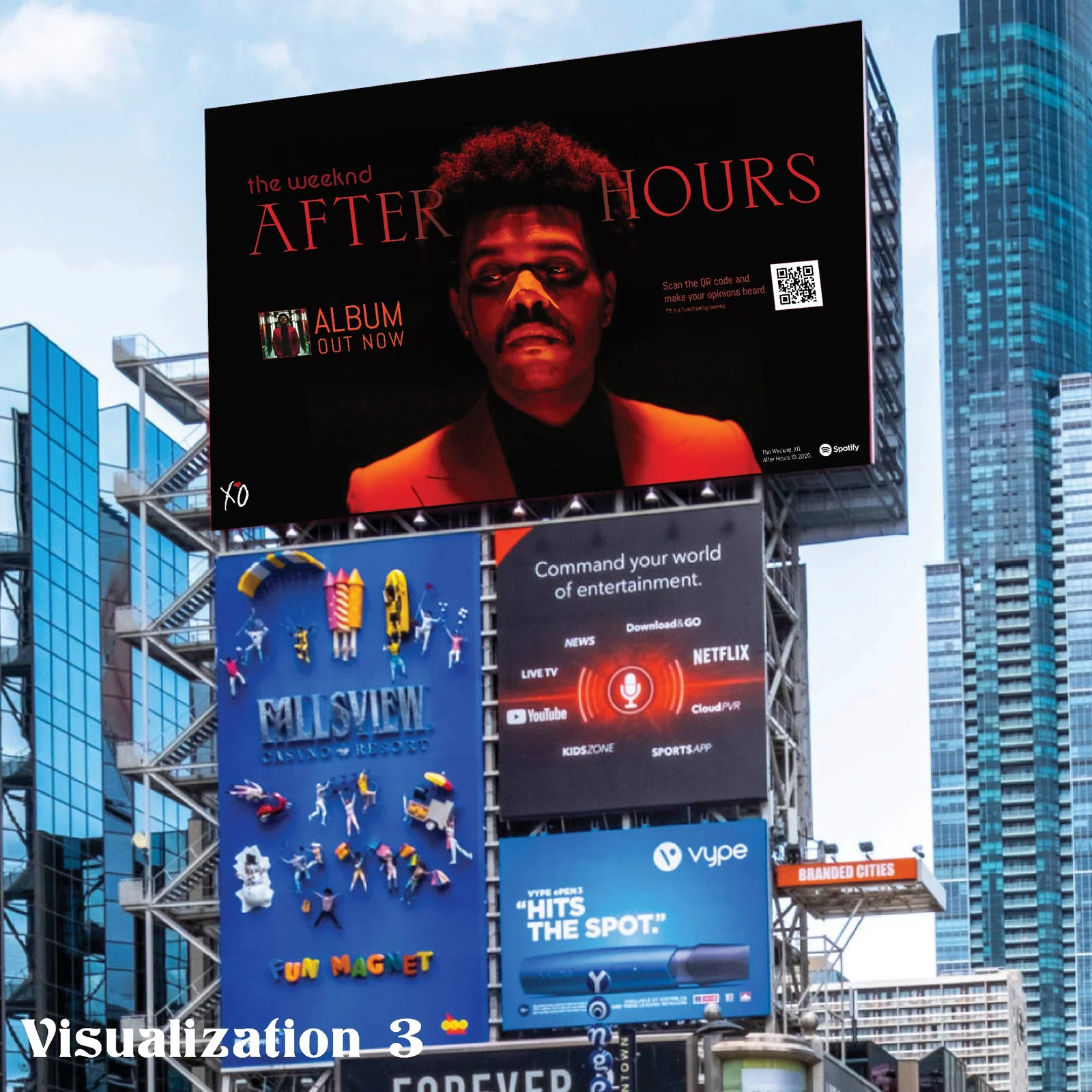
Out-of-Home Billboard — Yonge Dundas Square
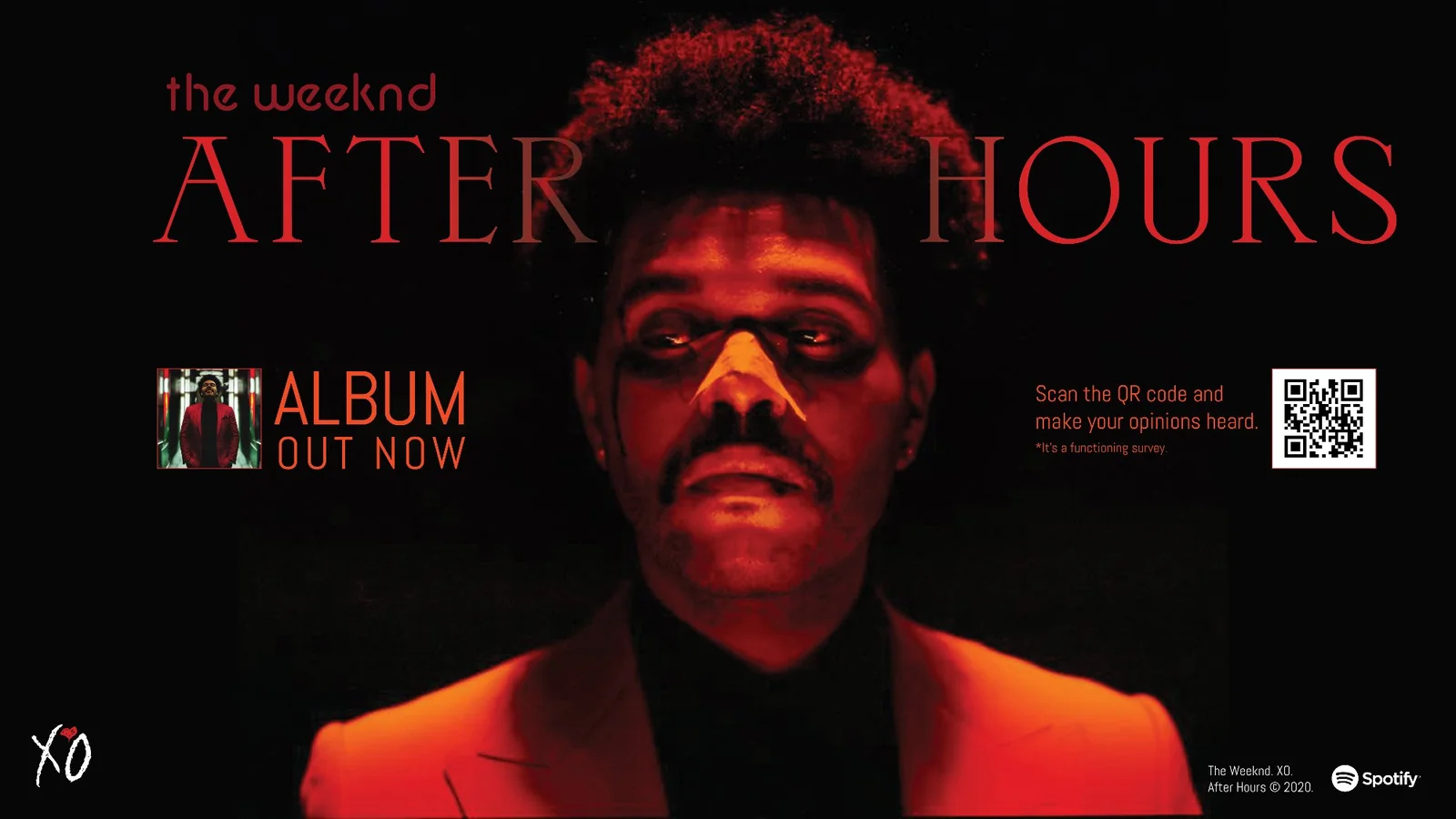
An out-of-home campaign places billboards in high-traffic areas across Toronto, led by Yonge-Dundas Square. Each execution asks one direct question: after hearing the album, is this a changed man, or someone falling further into its darker messages?
A corner QR code opens a simple yes-or-no vote on whether the album revealed a previously unseen side of the artist. Launching after the first month of release, the format can return alongside future tours as an evolving public response to the character.
Out-of-Home · Yonge Dundas Square · Month 2+
PL. 05Campaign 3 — Billboard ad
PL. 06Campaign 3 — Billboard visualization
Reflection
This project reinforced how brand identity is determined through symbols and differences in the marketplace — the sum of various attributes that define the brand, distinguish it with features, and make it recognizable (Pareek, 2015). The Weeknd's After Hours is more than an album; it is an ideology made visible.
Tying it all together, After Hours was the lovechild at his starting line eleven years ago — the days of melancholy with the heightened energy Tesfaye brings today. Marketing toward his audience requires forming a human relationship while offering value to consumers and music as an entirety. The empty pleasure given upon sharing the emotions has built a sense of trust between the crowd and the artist. Infused is the deconstruction and establishment of this Tesfaye that will not be forgotten.